For those who grew up with the legend of King Arthur and the sword in the stone, did you know that Tuscany had one of its own in the tidy Hermitage of Montesiepi, a ten-minute walk uphill from the roofless Abbey of San Galgano, Tuscany? 🗡️ My inner Brit was absolutely delighted to find this out, especially as it's just down the road!
A hermit, doing hermit things.
The abbey was €5 each when we went, with free parking. FWIW In the UK, the average adult admission price for a National Trust abbey or monastery is typically between £15 and £23 ~ which is 18 - 27.5 €, ie three times the price! Just sayin'.
The sword in the stone exhibit is found in the Hermitage of Montesiepi, just a short 10 minute walk from the Abbey of San Galgano.
The Knight who stuck it in there was Saint Galgano Guidotti (1148–1181) who was a wealthy, violent Tuscan who experienced a vision of the Archangel Michael. Around 1180–1181, he renounced his military life, thrust his sword into the rock to form a cross, and lived as a hermit from that day on.
There is a great ristorante and bar/caffè next to the abbey in the visitor centre building, two minutes away. And an outdoor dining & picnic area to enjoy in the warmer months too.
What may have been the abbey's original grand path or bridleway, is now flanked with Cyprus trees.
The ruins of San Galgano abbey are incredibly well preserved. It is only 76 km (about 47 miles) trip from the centre of Florence. It's free parking at the abbey. (The sword is in the neighbouring hermitage, a ten minute walk away).
This sword has been scientifically and metallurgically tested and the results verified it as an authentic 12th-century artefact.
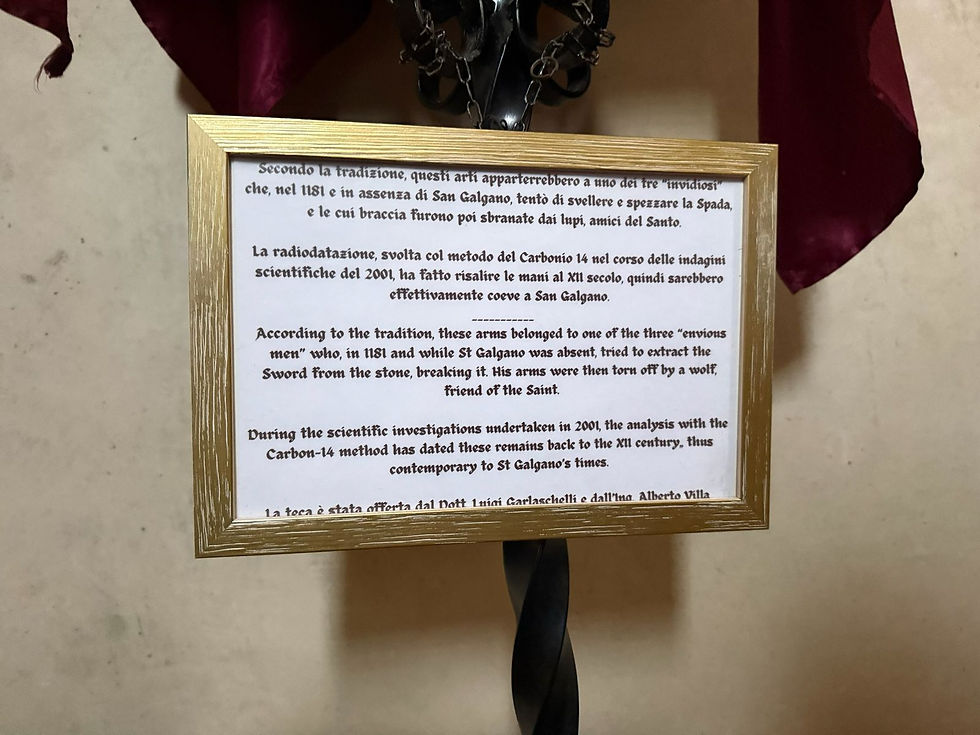
Of course it is now protected under a plexiglass case, but also under a relic curse (if you believe it), where allegedly an opportunist thief had their hands severed when trying to steal the knife, sadly breaking it in the process. The bones are carbon-dated to the same era, so who are we to doubt it?!
Serene and quiet, with barely anyone around. Feels so peaceful ~ like stepping into medieval times. A really great place to visit, and kids would love the trek to see the stuck sword :)
A lesser-known theory is that swords were placed in mud many centuries ago to redirect water flow, with the ground then petrifying over time. Also, medieval swords were used in ritual sacrifice and religious offerings which were the primary reasons they were deposited in mud, rivers, and bogs.
The abbey stands in acres and acres of very flat land, with a typical Tuscan hilly backdrop.
An enormous steel cross dominates perfectly manicured gardens.
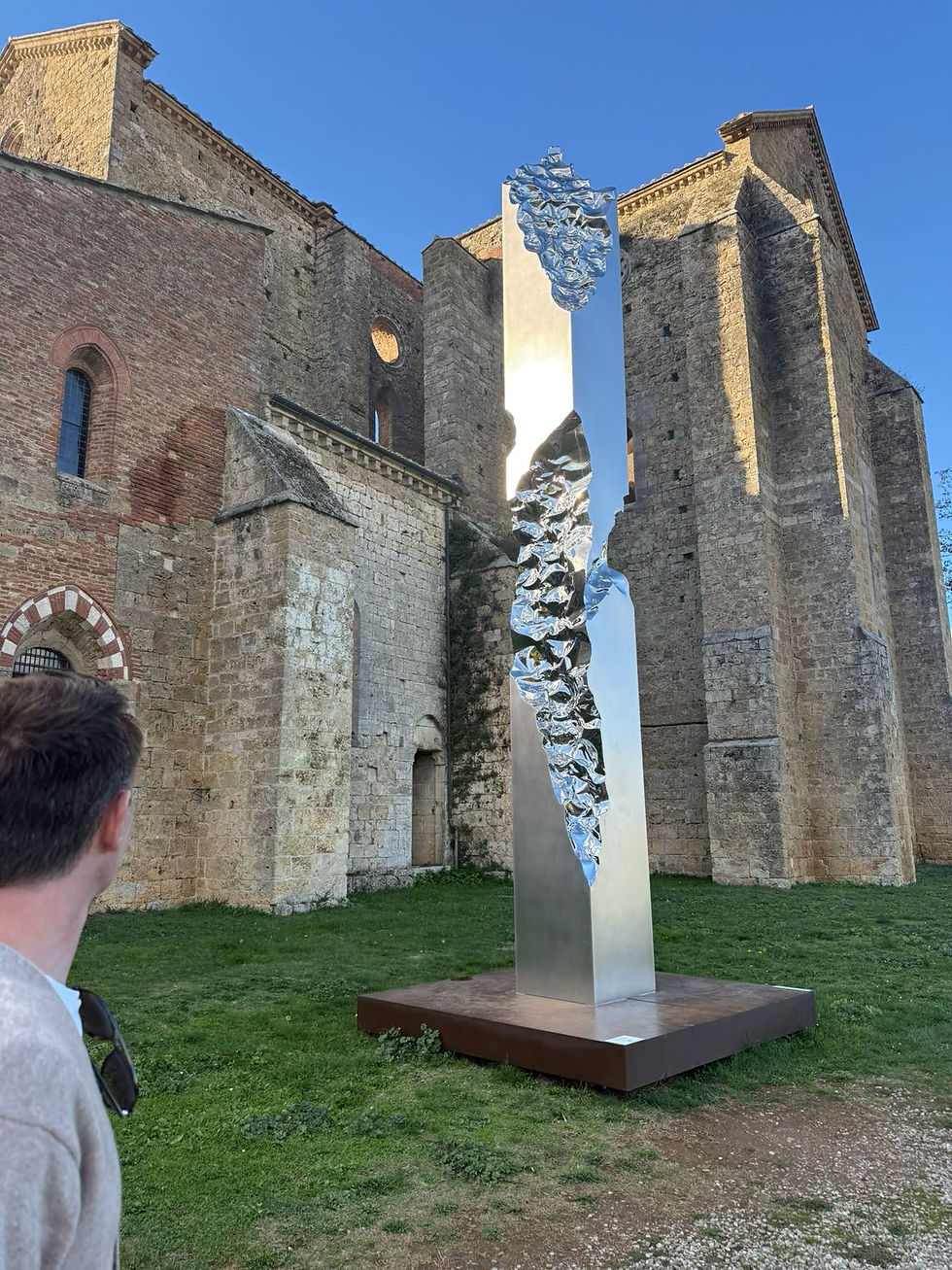
An impressive installation of several enormous chrome symbols in the Abbey's grounds. (Sphere, pyramid, obelisk and a cross).
A highly polished steel ball reflects history back at you.
It’s so quiet now, that it’s hard to picture how busy the abbey once was. The Cistercian monks ran mills and a forge, and pilgrims came for the sword up the hill. I’d really love to have a poke around with my metal detector! Doubt for one minute I would get permission for that.
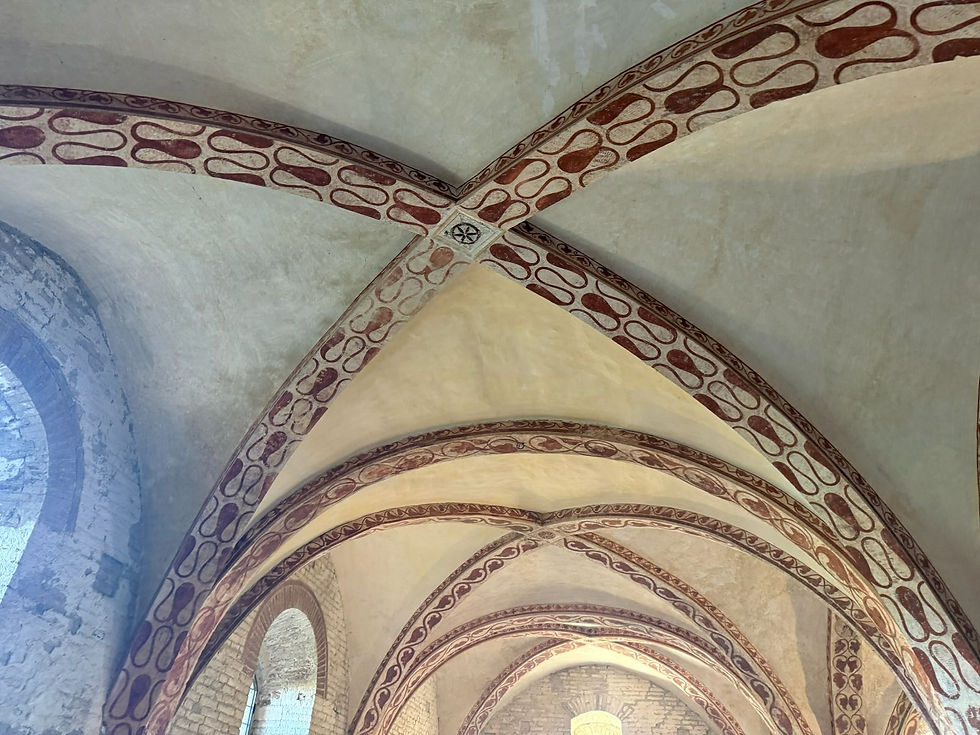
Ceiling in the abbey where you enter to purchase tickets. No crowds on a Sunday afternoon in November.
Founded by Cistercian monks from the Abbey of Casamari, San Galgano belonged to the branch of the order that traced its origins to Clairvaux in France. Through donations and purchases, the abbey amassed land in the Val di Merse, brought existing villages under its control, and acquired grain mills. Its power in the valley was economic as well as religious.
The big obelisk installation flush to the abbey. I forgot to read the plaque on it.
The Cistercian monks belong to a Roman Catholic monastic order established in 1098 at Cîteaux, France, by St. Robert of Molesme and his companions. Often referred to as the “White Monks” because of their distinctive undyed white robes, the Cistercians follow a particularly strict interpretation of the Rule of St. Benedict.
Great food served on-site
Their way of life centres on simplicity, manual labour, poverty, silence and communal prayer, reflecting a commitment to spiritual discipline and a life devoted to faith. I think they liked beer though and some grew barrel figures.
16th Century engraving of a Cistercian monk in O. Fialetti.
Here is the abbey below, not without a roof, rather reminiscent of England's Henry VIII dissolution of the monasteries between 1536 and 1541, when his agents stripped the lead from the roofs of more than 800 religious houses, including abbeys, priories and friaries.
There is wheelchair accessible in this colossal building, I believe, as it's all flat and wide.
Stunning rural vistas from up the hill at the foot of the Hermitage property.
Ornate and stylish ~ they don't build them like this anymore! Exquisite herringbone mullion window design.
Medieval glass window ~ the circular marks, known as bullseyes or spun rondels, originated from the crown glass manufacturing process used in the Middle Ages.
In this technique, a glob of molten glass was attached to a "pontil rod" and spun rapidly using centrifugal force to flatten it into a large, thin disc. The centre of this disc, where the rod was attached, remained thicker and more refractive, creating the distinctive circular pattern.
Got to love the Monks stairway up the circular twelfth century hermitage, to the inner sanctum somewhere sadly not publicly accessible. I cam imagine a 'medieval whodunnit night' here would be the BEST fun, and maybe a bit too real.
The abbey is a tad foreboding and must have been quite intimidating back in the day.
The yellow part of the neighbouring hermitage is the original building, dating back to 1185.
Picture postcard perfect.
The Hermitage of Montesiepi, perched on a hill overlooking the surrounding countryside.
The Hermitage on the hill, in all its glory. Refortified over the centuries. The rounded part being the original twelfth century build, as mentioned. This unassuming chapel is home to a centuries-old sword and a fascinating story that blends history, legend and local tradition.
The hermitage, closer up.
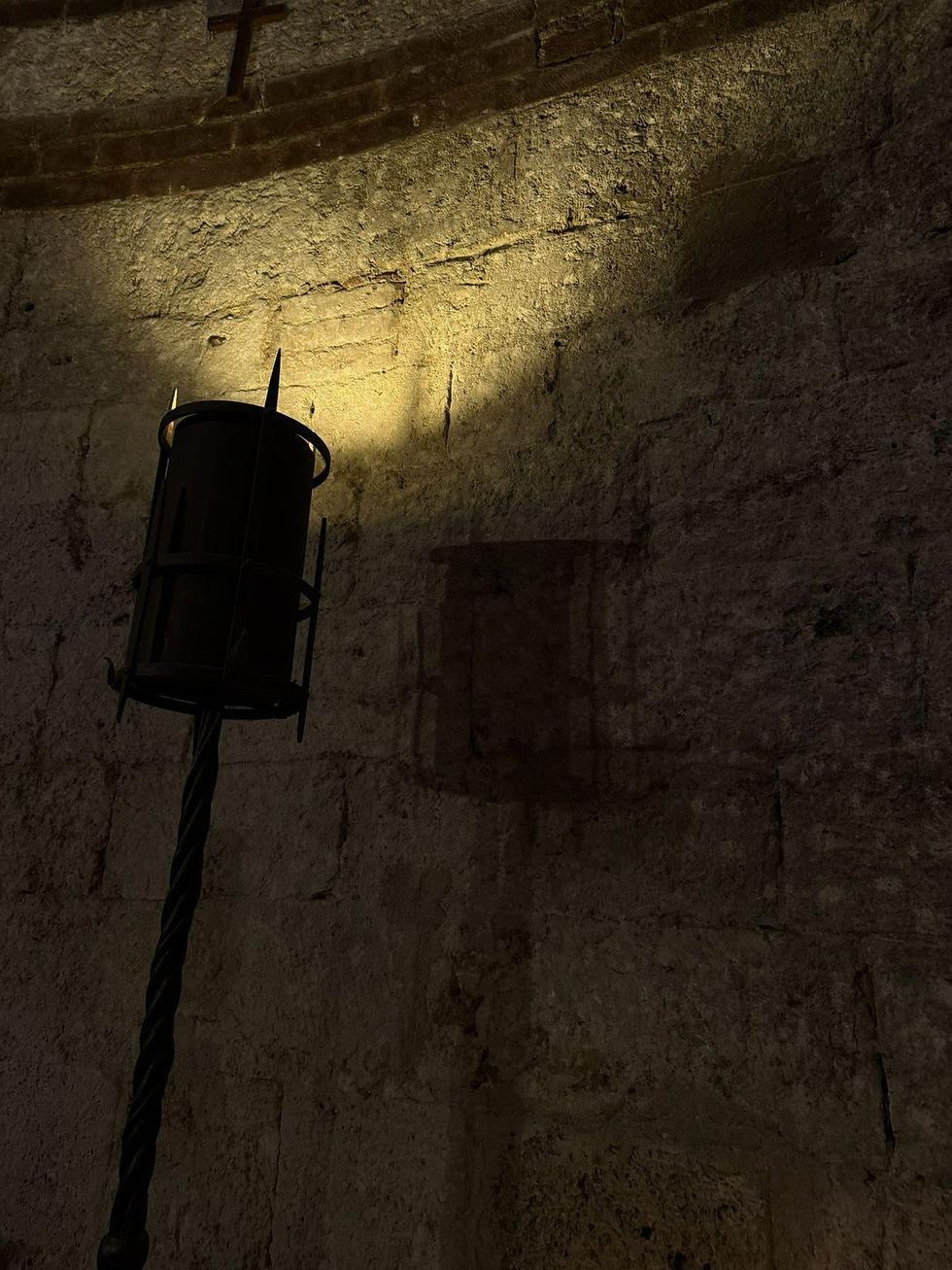
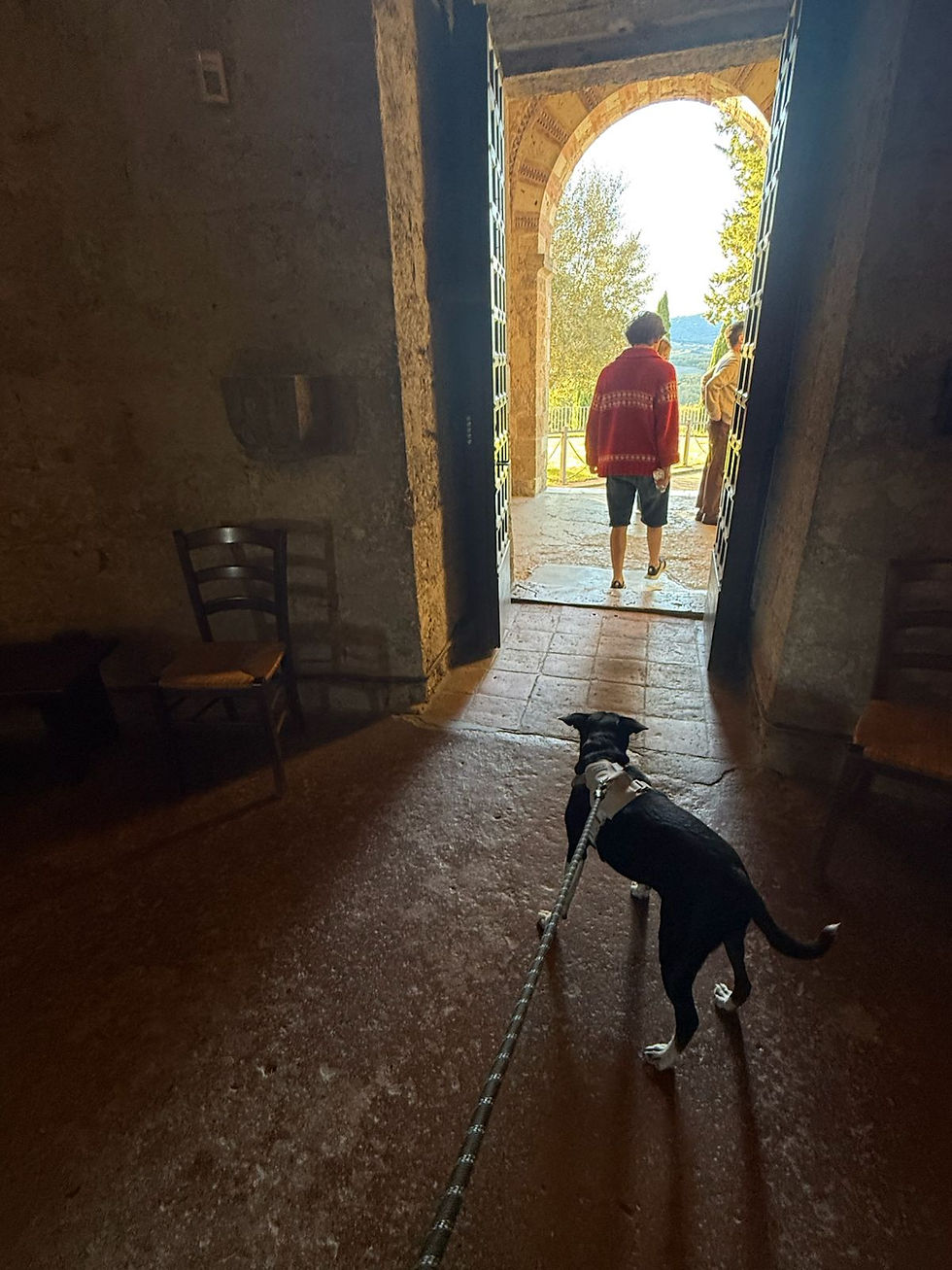
The evocative lighting in this part of the building is just enough to add that medieval mood to your visit.
Looks pretty authentic and probably is, except the halogen lightbulb inside.
The ceiling of the Hermitage features a distinctive hemispherical dome made of 24 concentric rings of alternating white travertine and red terracotta bricks
A painstakingly intricate design. IMO they had more patience and foresight in those days.
The intricate pattern creates a subtle spiral effect reminiscent of the Pantheon in Rome, contrasting with the building’s simple circular exterior.
The reflection of my nippers reacting to the arm and hand bones of the person who had the audacity (allegedly) to try and steal the sword from the stone, bad move.
Authentic C12th bones! I don't think they are King Arthur's as he pulled a different sword out and didn't break it.
All a bit too clear in this photo. Not sure if it was a man or a woman...
Medici heraldry on the Hermitage, of course.
"This is the most beautiful corner of the world" stone engraving, in one of the abbey gardens. I'm inclined to agree, it's at least one of the most beautiful places we have visited here in Tuscany.
Headed to the neighbouring town Chiusdino ~ a ten minute drive from the abbey.
It has timeless character. This may look better in black and white.
Rows of 'cigar' trees, everywhere.
Views from the hermitage are classic Tuscan rustic splendor!
Candle-lit reverence the VIrgin Mary and sleeping baby Jesus.
Flanked by a very tall fir tree, which no doubt looks elegant all year round.
Wonder if they decorate it at Christmas?
Local heraldry from the neighbouring town. (I am yet to establish which elite family this belonged to).
Overlooking a small cobbled sidewalk in Chiusdino.
Anyone familiar with this family's/families' coat of arms?
Juicy big rose hips on the way up to the Hermitage, too tempting to pick but don't want my arms chopped off.
Details on the Cylindrical Church / Hermitage.
Heading out after being spooked and super impressed by the age of the exhibits.
Chiusdino is high up and the valley views are phenomenal. It's worth the ten-minute car drive there before heading home.
Chiusdino is made of these little corridors, and is quite steep. I reckon all the locals have good hearts and robust calf muscles.
Walking to the abbey from the car park next to it.
I can imagine its quite exposed here in the colder months, but its beautifully colourful in Autumn.
Helps the busy mind to rest, and the heart to slow down.
This is placed outside the abbey in the garden, so I'm sure it has some history to it but I don't know what yet other than it is obviously very old.
Inside the abbey, avoiding featuring the University group that were visiting at the time and taking lots of measurements. Perhaps learning about sacred geometry?
I wish today's entrepreneurs would follow suit and not modify the landscape as much as they do.
Another wing of this great complex.
A view of the Hermitage from down the lane.
"Summer dies like a great day, as one dies on the thorn, as one dies without return, along the hedge canya rose.I feel a buzz nearby, maybe a bee, maybe of what? I want to lose myself alone in the sky made of oblivion, alone with you Dina Ferri."To Dina Ferri, Poetress On the 50th Anniversary of her death 1930-1980. Her fellow citizens in Perenn Remembrance Chiusdino 28~9~1980.
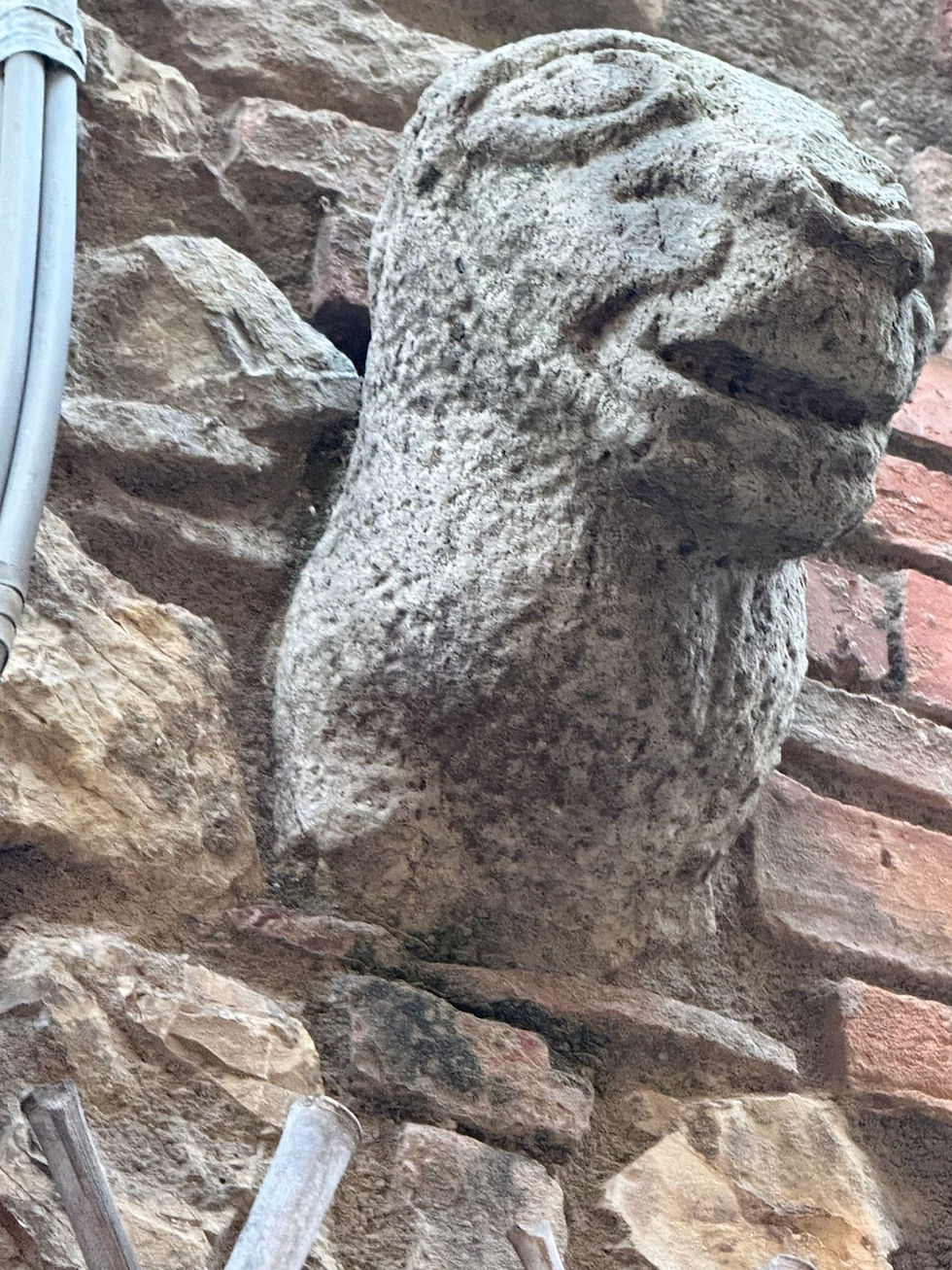
This is a medieval gargoyle probably from the original abbey (or a replica). It that seems to have been appropriated by a local in the town nearby and mounted street-side.
Peaceful, and the acoustics in here are great! Perfect for an impromptu Gregorian chant, or a classic soprano or Tenor Ave Maria performance.
I’d go back just for that little hermitage with its ancient stripy dome and sword in the stone, though the roofless well-preserved ruins of the abbey are a big enough 'wow factor' on their own.