When buying a traditional terracotta plant pot, it should come from Impruneta, Florence. (Plus, the surprise Renaissance inventors of Peposo 🥘)
Updated: Jun 29
The Italian architect, engineer, and sculptor, Filippo Brunelleschi, chose Impruneta's fine terracotta bricks for Santa Maria del Fiori (the Duomo's) unsupported vault.
Having lived in Stoke on Trent, England’s historic heart of the pottery industry, it is fascinating to now call Impruneta home, which is at the centre of Florence’s famous terracotta production. Situated on a plateau just south of Florence, Impruneta owes the exceptional quality of its terracotta to its clay rich foundations, particularly the distinctive local clay known as Galestro.
It is also prevalent throughout the Sienese countryside, and not just in Impruneta. But this special clay is packed with natural minerals that give terracotta its strength, durability, and long-lasting finish. Garden pots, roof tiles, or artistic designs, the clay works beautifully for many different purposes.

All around us there's lots of countryside and woodlands on the way to Chianti, though we are closer to Greve Chianti than Impruneta ourselves, only a stone's throw from a few big Terracotta outlets. When driving we often see the many enormous pots lined up, spanning many a firm's field. They were originally made for storing oil or water, along with timeless terracotta sculptures for more affluent buyers, though now the practical big pots and jugs are mainly used decoratively in well-manicured Italian gardens, or flanking the City's eateries and as ornamental plants near doorsteps.

Enough about succulents, here's Filippo Brunelleschi, famous as an architect but also a prankster.
He gas lit a friend and its remembered as Renaissance’s most elaborate practical jokes, known as the beffa di Manetto. After a carpenter named Manetto il Grasso missed a dinner, Brunelleschi and his friends (including Donatello) tricked him into believing he had somehow become another man, Matteo. Through a series of staged events, including being locked out of his house, arrested under Matteo’s name, and surrounded by accomplices pretending to know him as Matteo, Manetto was completely deceived. He only discovered the truth days later when his mother unknowingly exposed the prank.

Filippo Brunelleschi also had an eye for quality as well as a penchant for mischief. He selected terracotta from Impruneta for the construction of the dome of Florence’s Cathedral of Santa Maria del Fiore. He recognised that its unique combination of strength and lightness was crucial to supporting the vast, self-sustaining structure. The bricks were made to perfection, as was his order.
What makes Impruneta terracotta especially impressive is its ability to handle cold weather and damp conditions. Thanks to its high granite content, it is resistant to freezing temperatures, making it ideal for outdoor use all year round. Like a fine cheese or vintage wine, the pots left in the fields will improve with age, as weathered patinas soften into the iron-red fired clay, allowing them to settle naturally into the landscape. Quite pleasing to the eye in passing and weirdly esoteric in standing 'decorative' silence.

In fact, did you know that... The famous Tuscan dish, called Peposo alla Fornacina, was first created by kiln workers in Impruneta, this town near Florence known for making terracotta? The workers cooked cheap cuts of beef with red wine and lots of black pepper in terracotta pots. They placed the pots near the mouths of the brick kilns, where the leftover heat from the furnaces slowly cooked the stew over many hours.
While supervising the production of bricks and tiles for the cathedral dome, Brunelleschi noticed the workers eating Peposo. To stop builders from taking long lunch breaks, he had food stations built on the scaffolding and ordered pots of Peposo to be hoisted up alongside the bricks, making it the regular meal for workers on the construction site.

PEPOSO Ingredients for 4 people:
600g of stew beef
500ml of red Chianti wine
A spoonful of black peppercorns
Extra cold-pressed virgin olive oil
Sea Salt
Preparation:
Cut the beef into 3–4 cm chunks and lightly crush the peppercorns using the back of a spoon. Add the beef to a pot with the crushed peppercorns and a pinch of salt, then pour in enough red wine to fully cover the meat. Cook gently over a low heat for around 90 minutes with the lid on. The beef should become tender and richly infused with the wine, while some cooking liquid remains. The peppercorns should soften to a melt-in-the-mouth texture. If the liquid reduces too much during cooking, simply add a little more wine. Serve the peposo warm, ideally with slices of fresh Tuscan bread on the side.

The furnaces needed constant attention in the dark, cold and dangerous rooms, where the intense heat and fumes demanded a very disciplined vigilance. Their dedication ensured the tiles were perfectly fired, which was an important task for one of the world's greatest architectural achievements during the Renaissance. Here is a modern day version of that, it being much safer these days, but not without risk.

Beyond its practical benefits, Galestro clay also gives terracotta its distinctive colour and texture, adding to its timeless appeal. More than just a material, it represents a rich tradition of craftsmanship and cultural heritage that has shaped Impruneta’s identity for generations.
One of the big producers of terracotta products locally is "Masini Terracotte Impruneta". Here is their website https://fornacemasini.it/ which has some great photos on it. Founded in 1936, they took over an old kiln in the area and for generations they've continued to be committed to the production of high quality products made with Impruneta terracotta. They combine "beauty and craftsmanship with functionality and resistance", creating ergonomically appealing designs. A video of the Masini factory:
Many families worked together and became big names in terracotta production and tarde, namely;
Vanni: A prominent family active as early as 1681; their kiln was later acquired by the Masini family in 1939.
Casini: One of the earliest "mattonai" (brickmaker) dynasties documented in the area.
Falciani: A historic family that gave their name to the Falciani hamlet near Impruneta.
Ricceri: Founded the kiln at Via di Cappello in 1660, known for ornamental terracotta and majolica.
Brunori: Acquired the Ricceri factory in 1946 and continue its legacy today.
Agresti: Active in the 18th century alongside other major producers.
Soderi: Another significant family involved in 18th-century production.
Mariani: A multi-generational family operating several key firms, including MITAL (founded 1967 by Angiolo Mariani) and the historic workshop of Mario Mariani, which preserves traditional handcrafted methods.
Pesci: Established Fornace Pesci in 1976 (though the family business dates to the early 20th century), known for high-quality tiles and bricks.
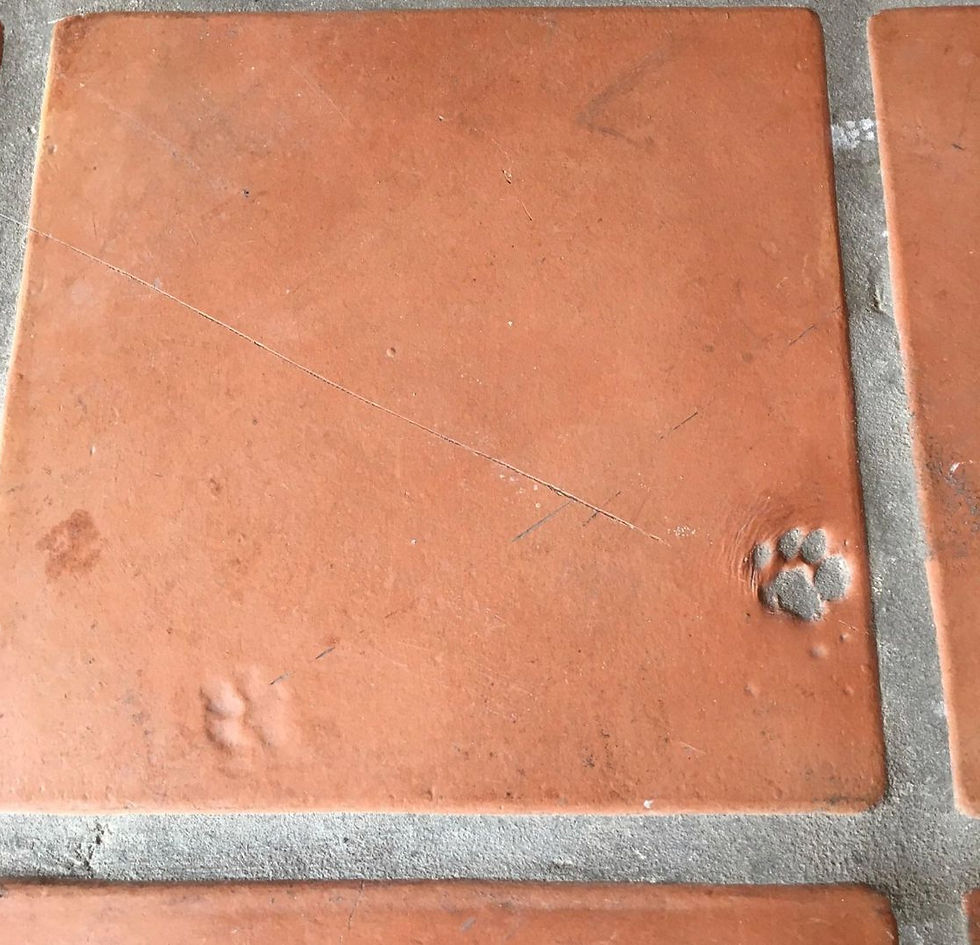
Brunelleschi’s exacting standards required flawless bricks from Impruneta’s craftsmen, likely encouraging the development of specialised production methods and material blends that distinguished their work from the techniques used by ceramicists elsewhere and in other Florentine buildings of the period.

A shabby big locally-made terracotta pot, at our house. The feet keep it stable on the sloped drive.

You can't see the pots for all the overgrown plants. Quite a succulent jungle mess, and pretty in a way.


Here is another fabulous website for large and ornate terracotta pot lovers https://www.terrecottemital.it/shop/en/13-festooned-terracotta-vases

Living here, it is easy to take terracotta for granted. The giant pots outside trattorias, weathered urns guarding gates, roof tiles glowing warm in the late sun, they simply become part of the scenery. Yet behind them sits centuries of craft, blistering furnaces, families perfecting a trade, and one famously demanding architect insisting on absolute perfection for a dome that still defines Florence today.
Now, when I drive past the endless rows of enormous pots drying in the fields near Impruneta (as opposed to when we first moved here), I see them differently. Not simply as decorative objects, but as descendants of the same earth and fire that helped lift Brunelleschi’s impossible dream into the Tuscan sky for many centuries to come. Even our slightly shabby lion-pawed pot at home feels like it belongs to something much older, a small reminder that in Tuscany, history rarely sits behind glass. More often, it is quietly growing a geranium, which is brilliant for keeping the mosquitoes at bay.


